
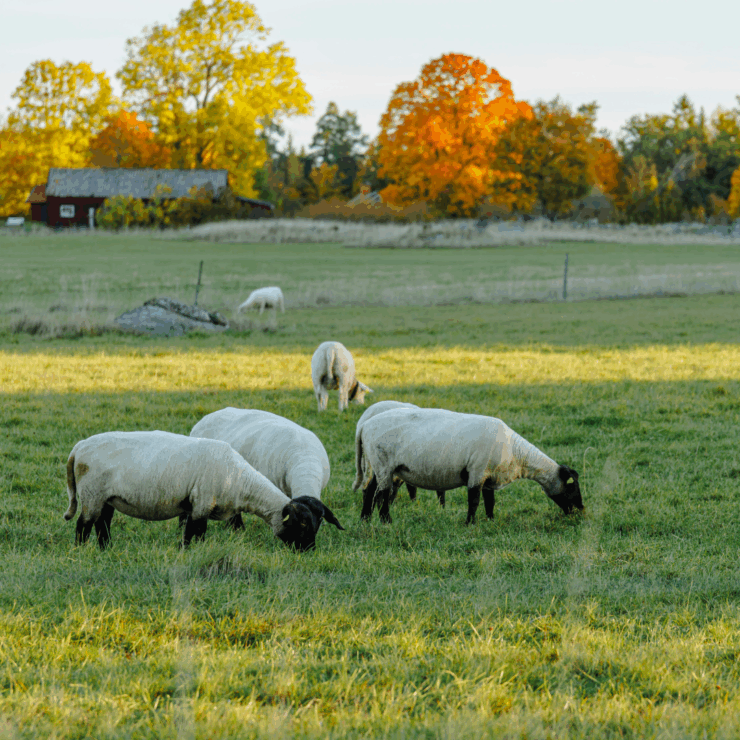
 Here’s a timely guide to transitioning livestock care as summer ends. Soon, the intense heat of a Georgia summer gives way to the milder days of fall, the needs of your livestock begin to change. This seasonal shift is a critical time for farmers. The lush summer pastures will soon fade, and the cooler weather brings its own set of challenges. Proactively transitioning livestock care from summer to fall ensures your animals remain healthy, well-conditioned, and prepared for the winter ahead.
This guide provides practical, seasonal livestock tips to help you manage this important transition. By adjusting your feeding, pasture management, and health care routines now, you can set your herd or flock up for a successful and healthy autumn season.
1. Adjust Feeding and Forage
The end of summer signals a significant change in your pastures. Warm-season grasses like Bermuda and Bahia will stop growing, lose their nutritional value, and eventually go dormant. It is essential to adjust your feeding program to account for this decline.
- Overseed Pastures: Fall is the perfect time to overseed your pastures with cool-season grasses like Fescue or annual Ryegrass. These grasses will germinate in the warm soil and provide excellent grazing through the fall and into the spring.
- Reintroduce Hay: Do not wait until the grass is completely gone to start feeding hay. Begin supplementing with hay as soon as you notice a decline in pasture quality. This gradual transition helps your animals’ digestive systems adjust from fresh forage back to a hay-based diet, preventing digestive upset.
- Assess Body Condition: Evaluate the body condition of each animal. The end of summer is the ideal time to help thinner animals gain weight before the stresses of winter arrive. Adjust their feed accordingly to ensure everyone enters the cold months in good shape.
2. Manage Pasture and Water
How you manage your land during this transition is just as important as how you manage your animals.
- Rest Your Summer Pastures: Avoid overgrazing your warm-season pastures as they go dormant. Leaving some residual grass helps protect the plant crowns and soil, ensuring a healthier pasture next spring. Begin a rotational grazing plan that allows these fields to rest.
- Check Water Sources: As temperatures cool, animals may drink less, but their need for fresh, clean water remains constant. Continue to clean troughs regularly. Before the first freeze, inspect all water lines and heaters to ensure they are in good working order.
3. Focus on Herd Health
Seasonal changes can bring new health considerations. A proactive approach to herd health in the fall pays dividends all winter long.
- Parasite Control: The cooler, wetter weather of fall can lead to a resurgence of certain internal parasites. Consult with your veterinarian to develop a deworming strategy that is appropriate for the season and your specific herd.
- Vaccinations: Fall is a key time for annual vaccinations. Work with your vet to ensure your animals are up-to-date on all necessary shots before the added stress of winter weather sets in.
- Shelter Preparation: Inspect all barns, run-in sheds, and windbreaks. Make any necessary repairs to roofs and walls now, before cold winds and winter rains arrive. Ensure shelters have dry, clean bedding.
Your Partner for Every Season
Transitioning livestock care from summer to fall is all about preparation. By focusing on nutrition, pasture health, and preventative care, you can ensure your animals thrive as the seasons change.
For all your fall farm needs, trust North Fulton Feed and Seed. We have everything you need for a smooth transition, from premium cool-season pasture seed and quality hay to livestock feed and health supplies. Our knowledgeable team understands Georgia farming and is ready to help you prepare for the months ahead. Visit one of our locations today and let us be your partner for a healthy and productive fall.