
 As the Georgia heat and humidity build, an unwelcome but familiar nuisance arrives on the farm: flies and pests. These persistent intruders are more than just an annoyance; they pose a significant threat to the health of your livestock, the productivity of your farm, and your own peace of mind. A single fly can carry dozens of diseases, and a swarm can cause stress that leads to weight loss, reduced milk production, and general agitation in your animals.
Effective pest management is not about waiting for an infestation to happen and then reacting. A proactive approach is the most effective way to prevent farm pests and keep their populations under control. This guide offers practical advice tailored for Georgia farms, covering sanitation, natural deterrents, and targeted solutions to help you win the war against flies and other pests this season.
The Foundation: A Clean Environment
The single most important strategy for fly control for farms is sanitation. Flies and many other pests are drawn to moisture and decaying organic matter. These are the places where they feed and lay their eggs. By eliminating these breeding grounds, you can drastically reduce the number of pests on your property.
1. Master Manure Management
Manure is the primary breeding ground for houseflies and stable flies. A single pound of manure can serve as the nursery for thousands of flies.
- Regular Removal: Clean stalls, pens, and high-traffic areas daily. Move the manure to a compost pile or a designated location far away from your barn and livestock areas.
- Proper Composting: If you compost, manage the pile effectively. A properly hot compost pile will generate enough heat to kill fly eggs and larvae. Turn the pile regularly to maintain aeration and heat.
- Strategic Spreading: If you spread manure on your fields, do so on hot, dry days. The sun and heat will dry out the manure quickly, killing the larvae before they have a chance to hatch.
2. Eliminate Standing Water
Mosquitoes, horseflies, and other biting insects need standing water to reproduce. Even a small amount of stagnant water can become a major breeding site.
- Check Water Troughs: Clean and scrub water troughs weekly to remove algae and larvae. Ensure any overflow drains away properly and does not create a muddy, wet area.
- Inspect Your Property: Walk your farm after a rain and look for areas where water collects. Fill in low spots, check for clogged gutters, and empty any containers like old tires, buckets, or wheelbarrows that have collected rainwater.
3. Manage Feed Areas
Spilled feed and damp, decaying hay create an attractive buffet for flies and rodents.
- Clean Up Spills: Sweep up spilled grain and feed immediately. Store feed in sealed, pest-proof containers to prevent access.
- Use Feeders: Use feeders for hay and grain to keep it off the ground. Clean out any old, wet hay that animals have refused to eat, as it can quickly become a breeding ground for stable flies.
Your Second Line of Defense: Natural Deterrents
Once you have established a clean environment, you can add another layer of protection by using natural deterrents. These methods work alongside your sanitation efforts to make your farm less hospitable to pests.
1. Encourage Beneficial Insects
Not all insects are bad. Several species are natural predators of flies and can be powerful allies in your pest control efforts.
- Fly Predators: These are tiny, non-stinging wasps that lay their eggs inside fly pupae, killing the developing fly before it can hatch. You can purchase them and release them around your manure piles and other potential breeding sites throughout the fly season.
- Promote Biodiversity: Avoid using broad-spectrum insecticides that kill beneficial insects along with pests. Planting flowering shrubs and native plants around your property can attract and support populations of dragonflies, spiders, and predatory wasps that feed on flies.
2. Harness the Power of Airflow
Flies are weak fliers and dislike windy conditions. You can use this to your advantage, especially inside your barn.
- Install Fans: Placing industrial-grade fans in your barn aisles and stalls creates an environment that is difficult for flies to navigate. The constant air movement also helps keep your animals cool and comfortable during the hot summer months.
The Final Step: Targeted Pest Control Products
Even with the best sanitation and natural deterrents, you will likely need to use some form of pest control product to manage persistent fly populations. The key is to choose the right products and use them strategically as part of an integrated pest management plan.
1. Baits and Traps
These products are designed to lure and kill adult flies, helping to reduce the breeding population.
- Fly Traps: Disposable fly traps that use a scent attractant are highly effective at capturing thousands of flies. Place them on the perimeter of your property, away from the barn entrance, to draw flies away from your animals.
- Fly Baits: Bait stations or scatter baits can be placed in areas where flies congregate. The flies consume the bait and die quickly. Always use these products in locations inaccessible to children, pets, and livestock.
2. On-Animal Protection
Protecting your animals directly is crucial for their comfort and health.
- Fly Sprays: A quality fly spray provides immediate relief. Look for products that offer long-lasting protection against a wide range of pests, including biting flies, gnats, and mosquitoes.
- Fly Masks and Sheets: These physical barriers are one of the most effective ways to protect your horse’s sensitive face, ears, and body from biting insects.
- Feed-Through Products: These are supplements added to your livestock’s feed. The active ingredients pass through the animal’s digestive system and into the manure, where they prevent fly larvae from developing.
Your Partner in Pest Prevention
A comprehensive approach that combines rigorous sanitation, natural deterrents, and smart product selection is the most effective way to prevent farm pests. By staying proactive, you can protect your animals, improve your farm’s environment, and make the summer season in Georgia far more enjoyable.
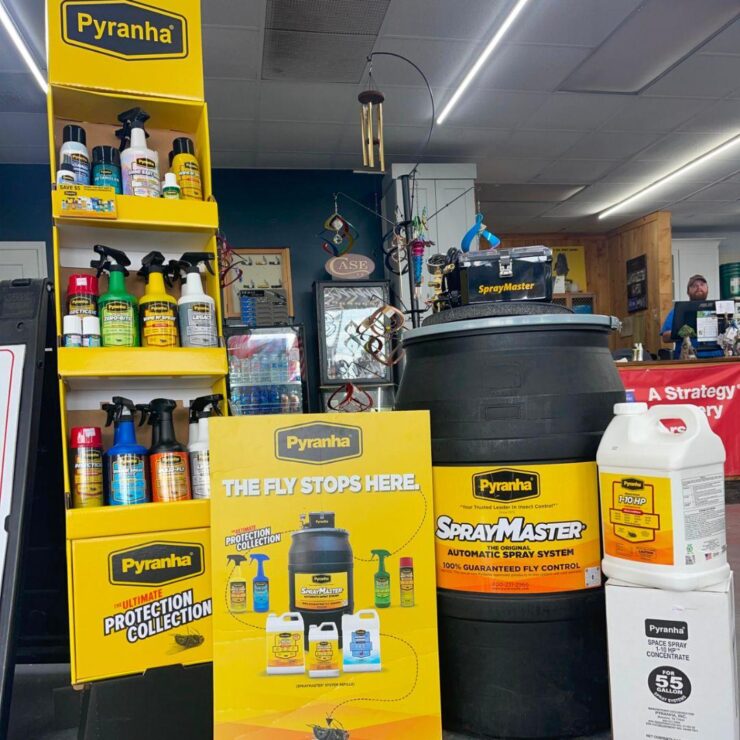
For a complete arsenal of fly and pest control solutions, visit Cherokee and North Fulton Feed and Seed. We carry a wide range of effective products, from fly predators and traps to on-animal sprays and feed-through supplements. Our expert staff understands the challenges of pest control in Georgia and can help you select the right fly control products for your farm’s specific needs. Stop by one of our locations today and let us help you take back your farm from flies and pests.