
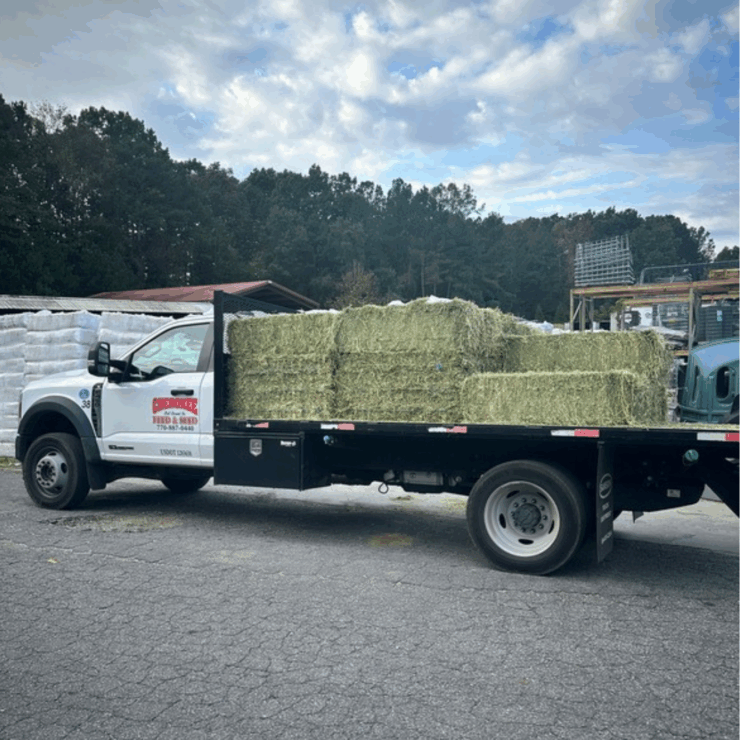
 In Georgia, summer brings intense heat and humidity, creating a challenging environment for storing hay. Your hay is a significant investment, providing essential nutrition for your livestock. Improperly stored hay can quickly lose its value due to mold, bleaching, and nutrient loss. Even worse, it can become a dangerous fire hazard. Protecting your investment requires a smart approach to summer hay storage.
Following a few key hay storage tips can make all the difference. Proper storage preserves the nutritional quality of your forage and ensures the safety of your barn and animals. This guide offers practical advice on how to store hay effectively during the hot summer months.
The Dangers of Heat and Moisture
The combination of heat and moisture is the biggest enemy of stored hay. Hay that was baled with even slightly too much moisture can begin to heat up from microbial activity. In a tightly packed stack, this heat cannot escape, creating a dangerous cycle. As temperatures inside the bale rise above 130°F, a chemical reaction begins that can generate enough heat to cause spontaneous combustion.
Even if it does not catch fire, hot and humid conditions create the perfect breeding ground for mold. Moldy hay not only loses its nutritional value but can also cause serious respiratory and digestive issues for your livestock.
Start with a Solid Foundation
Proper hay storage begins from the ground up. Never stack hay directly on the ground, even on a concrete floor. Concrete can wick moisture up into the bottom layer of your bales, starting a chain reaction of spoilage.
Always use a barrier to elevate your hay stack. Wooden pallets are an excellent choice as they lift the bales off the ground and allow air to circulate underneath. This small step is one of the most effective ways to prevent moisture damage.
Ventilation is Your Best Friend
Good airflow is critical when storing hay in summer. Trapped heat and moisture are a recipe for disaster. You need to give your hay room to breathe.
- Stacking Technique: Avoid packing your bales too tightly. Some farmers alternate the direction of each layer to create small air channels throughout the stack.
- Leave a Gap: Do not stack hay right up against the walls or ceiling of your barn. Leave a space of at least 18 inches around the entire perimeter of the stack. This allows air to move freely, carrying heat and moisture away.
- Open Barn Doors: On dry, breezy days, open up your barn doors and windows to create a cross-breeze and improve ventilation.
Protect from Sun and Pests
Direct sunlight can bleach the outer layers of your bales, causing a significant loss of vitamins and nutrients. While indoor storage is always best, if you must store hay outside, use a high-quality, UV-resistant hay tarp. Ensure the tarp is secured to create a peak so that rain runs off, but do not wrap it all the way to the ground, as this traps moisture.
Hot weather also brings pests. Rodents can chew through bales and contaminate them, while flies and other insects use hay stacks for shelter. A clean, well-managed storage area helps deter these pests.
Your Partner in Hay Protection
Properly storing hay in summer is essential for protecting your animals and your investment. By focusing on a dry foundation, good ventilation, and protection from the elements, you can ensure your hay remains safe and nutritious.
At Cherokee and North Fulton Feed and Seed, we understand the challenges of Georgia farming. We offer a range of supplies to help you with your hay storage needs, as well as a full line of effective fly control products to keep your barn and animals comfortable. We know all about premium hay, and we can even deliver it to you! Learn more about our hay delivery services.